
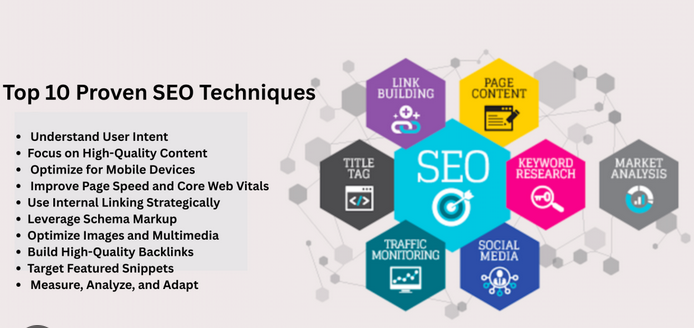
Search Engine Optimization (SEO) continues to evolve, but the core principles of ranking high on Google remain the same: deliver value, optimize strategically, and keep up with algorithm updates. While some tactics fade over time, certain SEO techniques remain consistently effective—even as digital trends change.
This comprehensive guide explores 10 powerful SEO strategies that still work today and will continue to deliver results. Whether you are growing a blog, eCommerce store, or business website, these techniques can significantly boost your visibility and organic traffic.
1. Mastering Keyword Research for Search Intent
Keyword research is still the backbone of SEO. However, the focus today is not only on keywords—it is on search intent. You must understand why people search for something and create content that satisfies that intent.
Types of Search Intent
-
Informational – user wants to learn something
-
Navigational – user wants to find a specific website
-
Transactional – user is ready to buy
-
Commercial investigation – user is comparing options
How to do it effectively
-
Target long-tail keywords with lower competition and high intent.
-
Analyze SERP results to understand what Google prefers.
-
Choose keywords that align with your business goals.
-
Use supporting keywords (LSI terms) naturally in the content.
When your content matches search intent, Google rewards it with higher rankings and better CTR.
2. Creating High-Quality, User-Focused Content
Content quality has always been one of Google’s top ranking factors. Today, Google emphasizes helpful, expert, reliable content.
What is high-quality content?
-
Answers all user questions thoroughly
-
Is well-structured, original, and updated
-
Includes relevant keywords naturally
-
Offers expert opinions, personal experience, and real value
-
Keeps users on the page longer (improves dwell time)
Tips to improve content quality
-
Use engaging hooks in introductions.
-
Add statistics, examples, case studies, and actionable tips.
-
Write conversationally but professionally.
-
Update older content regularly to maintain rankings.
Great content attracts backlinks, increases user trust, and strengthens your site’s authority.
3. Optimizing On-Page Elements for Better Rankings
On-page SEO remains a powerful technique that directly affects your rankings. Regardless of algorithm changes, the fundamentals always apply.
Key On-Page Ranking Elements
-
Title tag (include main keyword)
-
Meta description (increase CTR)
-
H1 heading (clear, keyword-focused)
-
Subheadings (H2–H4) for structure
-
Keyword placement in first 100 words
-
Internal links
-
Image alt text
-
URL structure (short and clean)
Why On-page SEO still works
Because Google needs context.
If your content is not properly optimized, the search engine cannot understand what your page is about.
4. Updating Old Content for Freshness Boost
Google loves fresh content. Pages updated regularly often outrank newer posts because they carry age, authority, and freshness.
Why updating old content works
-
Google recrawls updated pages more frequently
-
It eliminates outdated information
-
It increases relevancy and user satisfaction
-
You improve keyword optimization with new insights
How to update old articles
-
Add new statistics and updated steps
-
Improve headings and keyword placement
-
Include more visuals
-
Expand thin content
-
Improve readability and formatting
Refreshing older blogs often leads to fast rankings within days.
5. Building High-Quality Backlinks (Still a Top Ranking Factor)
Backlinks remain one of Google’s strongest ranking signals. But today, the focus is on quality, not quantity.
What counts as a high-quality backlink?
-
Comes from an authoritative, relevant site
-
Natural and editorial, not paid or manipulated
-
Enhances trust and credibility
Effective backlink-building methods
-
Guest posting
-
HARO (Help a Reporter Out)-style outreach
-
Skyscraper technique
-
Resource page link building
-
Broken link building
-
Creating data-driven and original content
Backlinks work because they act as “votes of trust” and signal Google that your content is valuable.
6. Improving Website Speed & Core Web Vitals
User experience is everything in modern SEO, and website speed plays a huge role. Google’s Core Web Vitals evaluate how fast and stable your website loads.
Key Metrics
-
LCP (Largest Contentful Paint) – loading performance
-
FID (First Input Delay) – interactivity
-
CLS (Cumulative Layout Shift) – visual stability
How to improve speed
-
Compress images
-
Use a CDN
-
Minify CSS, JS, and HTML
-
Remove unnecessary plugins
-
Enable browser caching
-
Use lightweight themes
Fast websites lead to better rankings, lower bounce rates, and higher conversions.
7. Using Internal Linking to Boost Page Authority
Internal links guide both users and Google through your website. They spread link equity and help search engines understand page hierarchy.
Benefits of internal linking
-
Increases session duration
-
Boosts authority for target pages
-
Helps new pages get indexed
-
Improves navigation and user experience
Internal linking tips
-
Add 3–5 internal links per article
-
Use descriptive anchor text
-
Link from high-authority pages to newer pages
-
Keep a proper site structure (hub-and-spoke model)
Internal linking is one of the easiest and fastest SEO wins.
8. Optimizing for Mobile Users (Mobile-First Indexing)
More than half of all global searches come from mobile devices. Google uses mobile-first indexing, meaning it evaluates the mobile version of your site first.
Mobile optimization steps
-
Use responsive design
-
Improve mobile readability (larger fonts, short paragraphs)
-
Optimize mobile page speed
-
Ensure all content is accessible on mobile
-
Fix clickable elements that are too close together
Mobile optimization boosts rankings and enhances user experience across all devices.
9. Increasing User Engagement Signals
User engagement plays a major role in SEO. Google measures how users behave on your website to decide whether your content is valuable.
Important engagement signals
-
Dwell time
-
Bounce rate
-
Click-through rate (CTR)
-
Pages per session
How to increase user engagement
-
Use strong introductions
-
Include visuals, infographics, and videos
-
Use short paragraphs and bullet points
-
Write in an engaging, conversational style
-
Add clear internal links and CTAs
-
Use compelling titles and meta descriptions
User engagement shows Google that visitors find your website valuable.
10. Leveraging Schema Markup for Rich Results
Schema markup helps Google understand your content better and can lead to rich snippets, which get higher CTR.
Types of schema that work well
-
Article schema
-
FAQ schema
-
Product schema
-
How-to schema
-
Review schema
-
Organization schema
Benefits of schema markup
-
Improves visibility in SERPs
-
Increases click-through rate
-
Provides additional information to searchers
-
Helps Google categorize your content correctly
Implementing structured data can dramatically improve your search performance.
Conclusion
SEO is not just about tricking search engines—it is about providing the best possible experience for users. While algorithms change, these 10 powerful SEO techniques continue to deliver lasting results:
-
Keyword research with search intent
-
High-quality content creation
-
Strong on-page optimization
-
Updating old content
-
Building quality backlinks
-
Improving Core Web Vitals
-
Effective internal linking
-
Mobile optimization
-
Better user engagement
-
Schema markup
By implementing these techniques consistently, you can increase your website’s visibility, attract more organic traffic, and grow your business.