
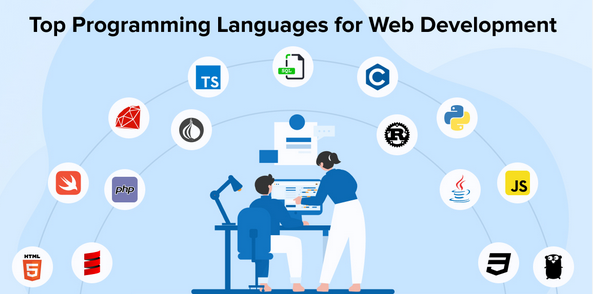
Web development is one of the most popular and high-demand fields in the digital world. Whether you’re planning to build a simple personal website, develop a large-scale online store, or start a career as a web developer, you will often hear two key terms: front-end and back-end development. These two areas form the backbone of modern web applications, yet they serve completely different purposes.
This beginner-friendly guide will help you fully understand the differences between front-end and back-end development, the technologies involved, the skills required, and how you can choose the right path based on your goals.
1. Introduction: Why Understanding Web Development Matters
Every website you visit—whether it’s Facebook, YouTube, Amazon, or your favorite blog—has two major sides working together. One side controls how the site looks, while the other handles how the site works behind the scenes.
Understanding the difference between these two sides is important because:
-
It helps you identify the right career path
-
It allows you to learn the correct tools and programming languages
-
It clarifies how websites and web applications function
-
It helps you collaborate with designers, developers, and clients
-
It prepares you for full-stack development if you want to learn both sides
By the end of this guide, you will have complete clarity on both the client-facing front-end and the logical back-end of web development.
2. What Is Front-End Development?
Front-end development focuses on the visual elements of a website—the parts users interact with directly. This includes everything you see in your browser:
-
Layout & design
-
Navigation menus
-
Buttons
-
Forms
-
Images
-
Text formatting
-
Animations
-
Responsive structure
Front-end developers ensure that websites are attractive, easy to use, and functional across different devices and screen sizes.
2.1 The Goal of Front-End Development
The primary goal of front-end development is to create a smooth and enjoyable user experience (UX). This means the website should:
-
Load quickly
-
Look professional
-
Be mobile-friendly
-
Be accessible to all users
-
Respond correctly to user actions
In simple terms, front-end development is all about building the visible face of a website.
2.2 Essential Front-End Languages
Front-end developers mainly use three core languages:
1. HTML (HyperText Markup Language)
HTML is the foundation of all web pages. It structures the content—headings, paragraphs, images, tables, forms, etc.
2. CSS (Cascading Style Sheets)
CSS controls the visual styling of a website. Colors, spacing, fonts, and layouts are managed through CSS.
3. JavaScript
JavaScript adds interactivity. If a website element moves, pops up, expands, or reacts to user input, it is likely powered by JavaScript.
2.3 Front-End Frameworks and Libraries
Modern front-end development relies heavily on frameworks to speed up development. Popular options include:
-
React.js
-
Vue.js
-
Angular
-
Bootstrap
-
Tailwind CSS
These tools help developers build complex interfaces efficiently and maintain consistency across the website.
2.4 Front-End Tools
Front-end developers often use tools to streamline development:
-
Version control: Git, GitHub
-
Package managers: npm, Yarn
-
Build tools: Webpack, Vite, Parcel
-
UI design tools: Figma, Adobe XD
2.5 Skills Required for Front-End Development
Successful front-end developers typically possess:
-
Strong design and visual understanding
-
Knowledge of HTML, CSS, JavaScript
-
Understanding of responsive design
-
Familiarity with accessibility standards
-
Problem-solving skills
-
Attention to detail
3. What Is Back-End Development?
Back-end development focuses on the server side of websites. This is the part users never see. The back-end controls how the website functions, handles data, stores information, and communicates with databases and APIs.
Examples of back-end tasks include:
-
User authentication (login systems)
-
Storing and retrieving data
-
Running server-side scripts
-
Managing databases
-
Processing transactions
-
Handling website security
-
Integrating APIs and third-party services
If the front-end is the face of a website, the back-end is the brain that makes everything work.
3.1 The Goal of Back-End Development
The main goals of back-end development are to:
-
Ensure the website runs smoothly
-
Store and manage user data
-
Secure the website
-
Handle server logic
-
Provide fast communication between front-end and server
Without the back-end, websites would be static and unable to store or process information.
3.2 Common Back-End Programming Languages
Back-end developers use server-side languages such as:
-
JavaScript (Node.js)
-
Python (Django, Flask)
-
PHP (Laravel)
-
Ruby (Ruby on Rails)
-
Java (Spring Boot)
-
C# (.NET)
-
Go (Golang)
These languages help process user requests, interact with databases, and deliver results back to the browser.
3.3 Databases Used in Back-End Development
Back-end development heavily depends on databases to store data.
Relational Databases (SQL):
-
MySQL
-
PostgreSQL
-
SQL Server
-
Oracle
Non-Relational Databases (NoSQL):
-
MongoDB
-
Cassandra
-
Firebase
3.4 Back-End Frameworks
Back-end developers often use frameworks to simplify complex tasks. Popular frameworks include:
-
Laravel (PHP)
-
Django & Flask (Python)
-
Express.js (Node.js)
-
Spring Boot (Java)
-
ASP.NET Core (C#)
3.5 Skills Required for Back-End Development
Typical back-end developer skills include:
-
Knowledge of server-side languages
-
Understanding of APIs
-
Database management
-
Server handling
-
Security concepts
-
Logical thinking and problem-solving
4. Front-End vs Back-End: Key Differences
Understanding their differences helps clarify which role suits your skills and interests.
4.1 Visual vs Logical
-
Front-End: Deals with visuals and interaction
-
Back-End: Manages logic, processing, and data
4.2 Tools and Languages
Front-end → HTML, CSS, JavaScript
Back-end → Python, PHP, Node.js, SQL, etc.
4.3 Responsibilities
Front-End Tasks:
-
UI design implementation
-
Responsive layout
-
Interactivity
-
Browser optimization
Back-End Tasks:
-
Database operations
-
Server configuration
-
Authentication
-
API development
4.4 User Interaction
-
Front-end interacts directly with users
-
Back-end interacts with servers and databases
4.5 Errors and Debugging
Front-end errors are often visible in the browser.
Back-end errors occur internally and require logs or server debugging.
5. What Is Full-Stack Development?
A full-stack developer is someone who can work on both the front-end and back-end of a website.
They understand:
-
User interface (UI)
-
Server-side logic
-
Databases
-
APIs
-
Version control
-
Deployment
Becoming a full-stack developer requires time and dedication, but it opens more career opportunities.
Popular full-stack paths include:
-
MERN stack: MongoDB, Express.js, React, Node.js
-
MEAN stack: MongoDB, Express.js, Angular, Node.js
-
LAMP stack: Linux, Apache, MySQL, PHP
-
Django full-stack (Python)
6. Which Path Should You Choose?
Choosing between front-end and back-end depends on your interests and strengths.
6.1 Choose Front-End If:
-
You enjoy design and visuals
-
You want to create beautiful, interactive websites
-
You like immediate visual feedback
-
You are creative and detail-oriented
6.2 Choose Back-End If:
-
You enjoy logic and solving complex problems
-
You like working with data and servers
-
You want to build secure and scalable systems
-
You are comfortable with code-heavy environments
6.3 Choose Full-Stack If:
-
You want flexibility
-
You like both design and logic
-
You want to increase job opportunities
-
You want to build complete applications on your own
7. Job Roles and Salary Overview
Front-End Developer Roles
-
UI Developer
-
Web Designer
-
JavaScript Developer
-
Front-End Engineer
Back-End Developer Roles
-
Back-End Engineer
-
API Developer
-
Database Developer
-
Server-Side Programmer
Full-Stack Developer Roles
-
Full-Stack Engineer
-
Web Application Developer
-
Software Developer
Salaries vary by country and experience, but back-end and full-stack roles often earn slightly more due to complexity and responsibility.
8. How Front-End and Back-End Work Together
Web development is teamwork. Here’s how both sides collaborate:
-
Front-end collects data from the user
-
It sends the request to the back-end
-
Back-end processes the request
-
Back-end fetches or stores data in the database
-
It sends results back to the front-end
-
Front-end displays the results to the user
This cycle happens in milliseconds—and happens every time you log in, search for a product, upload a photo, or submit a form.
9. Future Trends in Web Development
Front-End Trends
-
Motion UI & animations
-
Tailwind CSS growth
-
AI-generated UI components
-
WebAssembly
-
Progressive Web Apps (PWAs)
Back-End Trends
-
Serverless architecture
-
Microservices
-
Cloud computing
-
API-first development
-
Real-time applications
Both front-end and back-end fields are evolving rapidly, offering endless opportunities for developers.
10. Final Thoughts
Front-end and back-end development are two essential pillars of the web. While front-end focuses on the beauty, structure, and interactivity of websites, back-end ensures everything works smoothly behind the scenes. Understanding both helps you become a better developer, whether you choose one path or pursue full-stack development.
As a beginner, start by exploring your interests. If you love design and visuals, front-end might be your ideal choice. If you enjoy solving problems, handling data, and building logic, back-end development will suit you well. And if you want the best of both worlds, the full-stack path is the way to go.
No matter which direction you choose, the world of web development is full of exciting opportunities—so take the first step today and start building your skills.