
Content marketing has become one of the most powerful digital marketing strategies for brands, businesses, and creators. Whether you run an online store, a service-based business, or a personal blog, content marketing can help you attract the right audience, build trust, and increase sales—without relying heavily on traditional advertising. But what exactly is content marketing, and why is it so effective? This comprehensive guide explains everything in detail.
What Is Content Marketing?
Content marketing is a strategic approach focused on creating and distributing valuable, relevant, and consistent content to attract and engage a clearly defined audience. Instead of directly promoting a product, content marketing provides information, education, or entertainment that helps the audience solve problems or fulfill needs.
In simple words:
Content marketing = Delivering value first → building trust → driving profitable customer action.
This method works because today’s consumers don’t want traditional ads—they want helpful content that answers their questions, solves their problems, and builds a relationship with the brand.
Why Content Marketing Matters
Content marketing has become essential due to changing consumer behavior. People now research online before buying anything. They compare options, watch videos, read blogs, and check reviews. Brands that provide this information build credibility and influence purchase decisions without being pushy.
Here are a few reasons why content marketing is more important today than ever:
-
Customers trust content more than ads
-
Search engines reward high-quality content
-
Social media depends on engaging content
-
Content drives long-term, compounding results
-
It is cost-effective and sustainable
In short, content marketing is the backbone of online visibility and brand building.
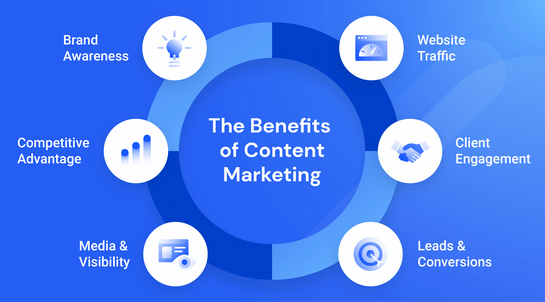
Benefits of Content Marketing
Content marketing offers a wide range of benefits across branding, SEO, conversions, customer loyalty, and long-term business growth. Below are the most important advantages explained in detail.
1. Increases Brand Awareness
Consistently publishing quality content helps your brand appear in search results, social media feeds, and emails. The more people consume your content, the more they recognize your brand. This improves visibility and helps you stand out in a competitive market.
2. Builds Trust and Authority
People trust brands that educate, guide, and help them before asking for anything in return. When your content solves problems, answers questions, and provides value, you naturally position yourself as an authority in your industry.
This trust eventually converts into sales and long-term customers.
3. Boosts Website Traffic and SEO Rankings
Content marketing is one of the most powerful SEO strategies. Search engines love fresh, useful, and keyword-rich content. When you consistently publish blogs, guides, and videos on important topics, your website ranks higher, bringing more organic traffic.
High-quality content also attracts backlinks, another key ranking factor.
4. Generates Qualified Leads
Great content attracts people who are already interested in what your business offers. For example:
-
A real estate blog attracts home buyers
-
A fitness video attracts health-conscious users
-
A digital marketing guide attracts business owners
By using lead magnets, email forms, and call-to-actions, content marketing converts readers into subscribers and potential customers.
5. Improves Conversions and Sales
Content guides customers through every stage of the buyer journey:
-
Awareness: Blogs, videos, social posts
-
Consideration: Comparison guides, case studies
-
Decision: Testimonials, product videos, reviews
The more a customer interacts with your content, the more likely they are to buy.
6. Supports Social Media Growth
Without good content, social media pages become boring and inactive. With engaging content like reels, infographics, quotes, and blog snippets, you can grow your audience and boost engagement.
Content marketing fuels your social media strategy with endless ideas.
7. Cost-Effective Marketing Strategy
Compared to paid ads, content marketing is cheaper and has long-term benefits. A single blog post can bring traffic for years. A single video can continue generating leads without additional cost. This makes content marketing ideal for small businesses and startups.
8. Enhances Customer Relationship and Retention
Content such as newsletters, tutorials, updates, and exclusive tips keeps your customers engaged and improves loyalty. It shows that you care about educating and helping them—and not just selling to them.
Types of Content Used in Content Marketing
Content marketing is not limited to blogs. It includes various formats depending on your target audience and platform. Here are the most popular types of content used in successful campaigns.
1. Blog Posts
Blogs are the foundation of content marketing. They help attract organic traffic, answer user queries, and establish brand authority.
2. Videos
Video is the most consumed content format today. It is ideal for:
-
Tutorials
-
Reviews
-
Product demos
-
Storytelling
-
Educational content
Platforms like YouTube, TikTok, and Instagram make video marketing essential.
3. Social Media Content
Short-form content helps keep your brand active and builds community engagement. Examples include reels, stories, tips, and carousel posts.
4. Infographics
Infographics visually explain complex data or processes. They are highly shareable and great for Pinterest, LinkedIn, and blogs.
5. E-books and Guides
These long-form content pieces are excellent lead magnets. Businesses use them to collect emails and nurture leads.
6. Case Studies
Case studies provide real-world results and prove the effectiveness of your product or service.
7. Email Newsletters
Email remains a high-converting channel. Newsletters allow brands to consistently communicate with their audience.
8. Podcasts
Podcasts are growing rapidly because they allow audiences to learn while multitasking. Ideal for storytelling, interviews, and deep conversations.
9. Webinars
Webinars offer real-time education and interaction. They’re especially effective for B2B companies and online educators.
Examples of Successful Content Marketing
Understanding real examples can help you get inspiration for your own content strategy. Below are some of the most effective types of content marketing examples you can learn from.
1. HubSpot Blogs and Free Tools
HubSpot built a massive audience through educational blogs, templates, and free tools. They offer value first, which results in high trust and billions in revenue.
2. Red Bull Extreme Sports Content
Red Bull doesn’t just sell energy drinks—it sells adventure and excitement through viral videos, sports events, and storytelling. Their content creates a lifestyle brand.
3. Nike Inspirational Storytelling
Nike’s content focuses on motivation, athletes, and human potential. Their emotional videos go viral and strengthen brand loyalty.
4. Canva Design Tutorials
Canva attracts millions of users through design tutorials, templates, and how-to content.
5. Amazon Product Guides and Reviews
Amazon uses content in the form of reviews, descriptions, and comparisons to push sales and help users make informed decisions.
6. Influencer Content Marketing
Brands use influencers to create product-focused content that feels natural and relatable, increasing sales and awareness.
How Content Marketing Works (Step-by-Step Process)
Content marketing isn’t random posting—it is a strategic process. Here’s how a successful content marketing system works:
1. Identify Your Audience
Understand who you want to reach:
-
Age
-
Interests
-
Problems
-
Goals
-
Buying behavior
The better your audience research, the more effective your content will be.
2. Set Clear Goals
Decide what you want your content to achieve:
-
Traffic
-
Leads
-
Sales
-
Brand awareness
-
Engagement
Each goal requires a different content approach.
3. Conduct Keyword and Topic Research
Identify keywords your audience is searching for. Tools like Google Keyword Planner, Ahrefs, or SEMrush can help. Topic research ensures you are creating content people actually want to read.
4. Create a Content Strategy and Calendar
Plan the type of content you will publish, how often, and on what platforms. A content calendar helps maintain consistency and quality.
5. Produce High-Quality Content
Focus on:
-
Accuracy
-
Originality
-
Value
-
Readability
-
SEO optimization
Good content delivers solutions, not fluff.
6. Distribute the Content
Share your content across multiple channels:
-
Website
-
YouTube
-
Social media
-
Emails
-
Ads
-
Influencers
Distribution ensures your content reaches the right audience.
7. Measure Performance
Track:
-
Traffic
-
Engagement
-
Leads
-
Conversions
-
Shares
-
SEO rankings
Data helps you refine your strategy over time.
Best Practices for Content Marketing
To get the best results from your content marketing efforts, follow these essential best practices:
1. Always Put the Audience First
Your content should solve a problem or provide value. Avoid focusing only on selling.
2. Be Consistent
Whether you post weekly or monthly, consistency builds trust and long-term growth.
3. Use SEO Strategically
Optimize content with:
-
Keywords
-
Internal links
-
Meta descriptions
-
Image alt text
-
Proper formatting
This helps your content rank higher on search engines.
4. Write High-Quality, In-Depth Content
Long-form content ranks better and provides more value.
5. Use Visuals to Improve Engagement
Images, videos, and infographics make content more attractive and memorable.
6. Promote on Multiple Platforms
Don’t rely on one channel. Share your content through email, social media, messaging apps, and communities.
7. Understand the Buyer Journey
Create content for:
-
Awareness
-
Consideration
-
Decision
This ensures you guide the audience toward conversion.
8. Use Analytics to Improve
Track what works and what doesn’t. Continuously update and improve your content.
9. Repurpose Content
Turn one piece of content into:
-
Video
-
Social post
-
Infographic
-
Podcast
-
Email
This saves time and multiplies reach.
10. Focus on Storytelling
People emotionally connect with stories. Use storytelling to make your content more memorable and shareable.
Final Thoughts
Content marketing is one of the most effective and sustainable digital marketing strategies available today. It helps you attract the right audience, build trust, grow your brand, and increase sales without aggressive advertising. Whether you’re a beginner or a business owner, mastering content marketing will give you a long-term competitive advantage.
By consistently creating valuable and engaging content, you can build a strong online presence and turn your audience into loyal customers.